
Invisible Fish
Writing received right before the author passed away gives us keys to grieving and living
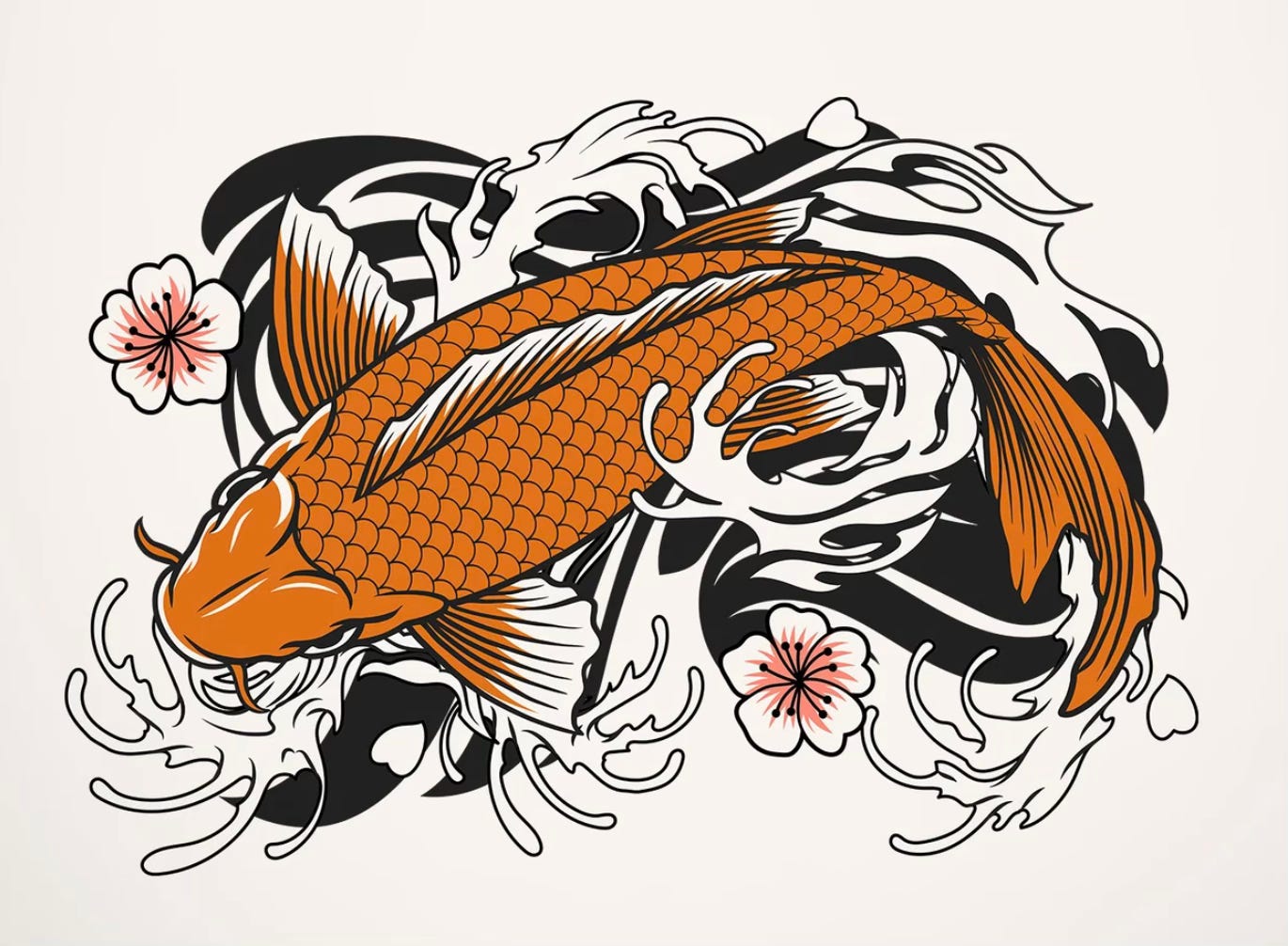
I founded VESTIGE JOURNAL to preserve what is worthy in human creation in age where AI is a looming threat. However, many of the submissions I received were so dark that I wasn’t sure how to proceed. Then I read David Holloway’s, Invisible Fish. I wept the entire way through and ended with a sense of peace I have not felt in quite some time. He was lovely to correspond with as I prepared his piece and an author interview for publication this spring. He also had a career as a rare book dealer and was clearly someone who was knowledgeable in and loved the written word. Then I heard from his wife that he had passed. It hit me hard - I felt I was too late when I lost pregnancies, I was too late when my father had a sudden heart attack, and now I was too late again… but then I realized I wasn’t. VESTIGE was founded in time to receive this piece and share it with you, David knew it had been accepted and was able to share his process and personhood as an author with us before he passed. And now this story speaks even more poignantly. Thank you David, I don’t know what else to say, but you said it all in Invisible Fishes and clearly this story is meant for this community in a way I probably don’t even realize the full impact of… At the end of his piece I have included David’s author interview and headshot; I can tell he was a kind soul whose smile lit up every room he entered.
INVISIBLE FISH by David Holloway
The lifespan of an Invisible Fish cannot be measured in years.
I told Edmund about the Invisible Fish when he turned seven. He sat on the living room floor playing with his Hot Wheels cars while I fed the fish in our aquarium. He had organized the cars on the carpet in rows, sorted into different makes.
“Daddy, I made your car lot!”
I ran my fingers through his curly hair.
“Good job, Buddy. Who are you going to sell them to?”
“You and Mommy!” he said.
The boy had an answer for everything.
“Edmund, did I ever tell you the legend of the Invisible Fish?”
“Noooo.” He drawled, shaking his head.
“Well, once every great while, an incredibly special fish is born. A wonderful and rare fish. A fish like no other.”
Edmund stopped playing with his cars to listen.
“This special fish is invisible! As long as the fish keeper takes exceptionally good care of his aquarium, the Invisible Fish will stay. Some people think Invisible Fish hatch out of rocks; others think they come in on the roots of plants, but nobody really knows how they get into the aquariums.”
“What do you think, Daddy? How do the Invisible Fish get in?”
“I think they fly, Edmund. I think they fly through the air like wild geese.”
He giggled.
“Nobody knows much about Invisible Fish, but the fish keeper who has an Invisible Fish has been chosen by fate. The Invisible Fish shares its power with the human it loves. Its presence is a reward for a kind heart and heroic nature. I’m sure that I saw something invisible move in your aquarium this morning.”
He pushed his nose right up against the tank’s glass side, checking every corner.
“You have to watch for what isn’t there. If you look closely, you can see something twitch or shimmer. That’s the sign of an Invisible Fish,” I said and crouched down to put my face next to his.
We found evidence of at least one Invisible Fish. Ed loved the story, and I told it to him again and again over the years.
When Edmund was ten, Sandra was diagnosed with breast cancer. She managed to hang on until his fourteenth birthday. After dinner, he would sit on the side of her bed, discussing school, his tennis matches, cars, or even the Invisible Fish. I’d watch from the hall, not wanting to interrupt. The doctors said it was a question of when, not if, and I didn’t want to cheat either of them out of their time together.
I’d sneak down to the den and feed the fish when my crying got too ugly. They never minded my sobbing and blowing my nose between dropping food into the tank for them to devour. My vision blurred with tears. I often thought I saw something that wasn’t there when my eyes dried.
The doctors tried everything: surgery, chemo, radiation. Sandra shrank a bit with every treatment. I took Ed to see his mom in the hospital, and she did a fantastic job of pretending that none of us knew how sick she was. We all ignored how her strong gardener’s hands were now weak and trembling, how her once clear eyes seemed cloudy, and how she suddenly dropped off to sleep without warning. She had pictures of us at her bedside, a sure sign that she had been there too long. She managed to keep her wonderful, crooked smile and always ended each visit with.
“I’ll be home with both of you soon!”
The migration patterns of Invisible Fish remain a subject of scientific investigation.
Edmund left a note taped on the refrigerator.
Dear Dad,
Gone to California with Debbie, seeking fame and fortune! Took the blue Celica with the Visualize Whirled Peas bumper sticker from the back of the lot and $500 cash from the lockbox – left an I.O.U. Surf’s UP!
Love you, Dad- Edmund.
He had taken his Star Wars poster and laptop. When I saw that the framed picture of Sandra was missing from his bedside table, I fell onto his bed as if I’d been pushed.
I shook my hands four or five times at my sides, leaving my fingers loose. ‘Shaking off the black drops,’ Sandra used to call it, and she always did it after getting bad news.
I called Debbie’s parents, and they were surprised that I didn’t know their shared California dream. They said that Debbie told them when she and Ed would be leaving, and what their plans were once they reached California. I couldn’t understand why Ed hadn’t told me.
In the 50-gallon aquarium against the living room wall, four giant Angelfish (Zippy, Zelda, Ziggy, and Zog) swam in formation from one end of the coffin-shaped tank to the other. As I entered the room, they turned to face me, hovering in place. They’re Veil Angels, silver with black stripes and long trailing fins. When I placed my fingertips on the surface of the water, they rose to nibble on them gently. The large Plecos catfish that Edmund named Popeye sat like a stone on the gravel bottom of the tank.
I opened the top and sprinkled a tiny amount of flaked food in the water, and the lovely alien creatures slid to the surface to feed.
The guide to the care and feeding of Invisible Fish hasn’t been written.
I slipped on my crocodile boots, combed my hair, and walked out to the Escalade. I live five blocks from the car lot and could easily walk it, but a car dealer on foot sends a bad message.
Carlos had opened the place, and Gary stood on the street corner holding the six-foot-long orange day-glow sign and spinning, flipping, dancing, and poking it toward the lot. The kid’s an artist. I’d hate losing him when he went back to college in the fall.
“Hey, Gil. You know anything about a Celica missing from the back lot?” My manager, Carlos, stands in my office doorway to talk unless I invite him in. This time, I let him stay in the doorway.
“It’s OK. Edmund has it. He took off last night for California with his girlfriend.”
“Why’d he take the Celica?”
“Got me. He could have taken anything. I would have taken the yellow Mustang.”
“Me too,” Carlos agreed.
Invisible Fish mate with new partners every season. They stay together only until their baby fish, called fry, mature.
At the end of the day, I came home to an empty house. I slipped the family video into the VCR and sat down to watch what had been my life.
It started with still photos of Sandra and me just after we moved from Charlotte to Spartanburg, South Carolina. In one of my favorite pictures, Sandra stretches out on the hood of our brown Impala, laughing in the dusk at the Thunderbird drive-in. We drove good American Iron in those days: Oldsmobiles, Chevys, Fords. In another, she looks up from digging a flowerbed in the front yard, her face smudged. Her oversized gardening gloves make her hands look like a cartoon character’s.
Edmund begins showing up, first as a baby, then as a toddler. He loved his Big Wheel tricycle more than any other toy he ever had. He’d zoom down the driveway and stopped by yanking the wheel and skidding.
It occurred to me how seldom I appeared in the pictures or videos. I guess I always held the camera. I created the record but wasn’t part of the record.
The tape ended.
Of course, I knew Edmund would eventually strike out on his own. It just seemed like nineteen was too young, even though Sandra and I had been married by the time we were nineteen. I hoped he and Debbie would break up so that he would come home. I knew the wish was selfish, but I missed him terribly.
The lateral lines, those organs that help fish sense nearby objects, on Invisible Fish display a more intense and varied range of sensations than any other species. They communicate solely using this sense organ.
Edmund finally called three days after he had left for California.
“Hey, Dad, did you feed the fish?”
“Edmund, where are you? Are you and Debbie OK?”
“Everything’s fine. I’m in LA. We’re staying with Debbie’s cousin until we get our feet under us. It’s so beautiful here, Dad. I’ve already gone to the beach. The waves are incredible, and I saw some professional surfers for the first time.”
“Why didn’t you tell me you were leaving?”
He didn’t answer my question, and instead asked, “Is Zog’s tail healed? Have you seen the Invisible Fish lately?”
We talked fish for a little while. It’s our way of saying we love and miss each other. How would Sandra have managed Edmund leaving?
I remember discussing one of his friends who seemed like trouble when he was a teenager. I finally sighed and said, “I guess they reach a point where you have to let them make their own mistakes.”
“And make their own discoveries,” Sandra added.
The Invisible Fish have elaborate breeding and parenting habits. Fry hatch six hours after the mating dance in tiny clutches. Both parents swim around them in tight circles, protecting them until they can live independently.
When the phone rang a week later, I thought it would be Edmund reminding me to feed the fish. Instead, a California State Trooper stammered his way through the story of a long-haul trucker falling asleep at the wheel and how the truck drifted across the center line of a two-lane highway at high speed. Witnesses said that Ed’s quick reactions saved other drivers. Debbie had died at the scene. I wondered if it would have made a difference if he’d been driving the Mustang, a car with more power and better handling.
I flew out to Los Angeles and found Edmund motionless in his hospital bed. The ventilator pumps filled his lungs, hissing and bubbling like the failing pump of a huge aquarium.
“You cut his hair!” I said to the first nurse to come into the room.
Edmund lay perfectly still on his back; his curly hair trimmed back to stubble. Mysterious tubes and wires came out of him. Machines beeped and hummed all around. Everything in the room made noise, except for Edmund.
“We needed to put a shunt in,” she explained as if that told me anything.
“He won’t like it when he wakes up,”
The nurse didn’t reply.
Sandra always loved Ed’s curly hair. When he visited her in the hospital after the chemo, she said that he had enough hair for them both.
I stayed with him in the hospital room for six days. Nurses and doctors rushed in and out of the room like some animated stop-motion horror movie. I held his hand, stroked his forehead, and cried enough for us both.
I talked to him. I spent a lot of time talking fish. I told the legend of the Invisible Fish repeatedly with wild embellishments and variations.
I told him how in Honduras fish fall from the sky with the rain so frequently there is an annual Festival de Lluvia de Peces with a parade and carnival to celebrate and used that as proof that Invisible Fish do migrate through the clouds.
I discussed Dr. Herbert Axelrod, the tropical fish millionaire. If you bought a book about tropical fish, your dog breed, your cat, or even your lizard, his company published it. He spent his millions wisely. He created the finest collection of Stradivarius instruments ever held in private hands. At the time of his death, Axelrod was working on a guide to the feeding and care of Invisible Fish even though he knew that Invisible Fish do not care for classical music.
Most fish can be trained to follow a finger dragged along the outside of an aquarium, or to respond to lights. People have even taught them to jump out of the water for treats or to swim through hoops, but Invisible Fish find such behavior demeaning and behave as they wish based on their own desires.
I explained that among the Indigenous peoples of western Tuva, the Invisible Fish represents a trickster God similar to Loki or the American Indian Coyote, and they feel that he cannot be trusted.
I described Invisible Fish that Benjamin Franklin, Louis Pasteur, Buster Keaton, Gandhi, and Jim Thorpe owned.
I told him that his Invisible Fish would surely protect him and help him heal. I lied.
It isn’t known whether Invisible Fish can see or sense colors.
I buried him on a scorching cloudless July day right next to his mother. I put his favorite Ray-bans in the pocket of his suit jacket at the funeral home. He still wore the buzz cut the hospital gave him.
Before I got into the limo to go back to the funeral home, I shook my loosened hands at my sides so hard I thought that I might break a finger, but there were far too many black drops to shake loose. My life had been shattered, again. Would I ever be whole? Did I have another recovery in me?
I didn’t go in to work too much after Ed died. I signed checks and glanced at the books, but not much else. The fish needed me.
I set up more and bigger tanks. Most of the fish were Angels, but I also had a fifty-gallon tank with five large red and black Oscars (Hank, Merle, Waylon, Johnny, and Patsy). I bought Chocolate Angels, Blacks, and Chocolate Ghost Angelfish. I kept a detailed log recording feeding time, water temperatures, pH levels, the fish’s behavior, etc. Edmund would have loved it. The bright fluorescent lights on the tanks, like surgical lights, revealed everything in startling detail.
The whisper of the air filters and water circulators filled the house. I rarely opened the window shades, and the house stayed lit with reflected blue and green light that wavered as the currents and creatures in the many aquaria moved to their own sad music.
I put a Koi Pond in the backyard, and although the person who sold me the Koi said that it was bad luck to name them, I ignored his advice and named each of them after muscle cars: Mustang, Camaro, Charger, Shelby, and Chevelle.
Scientists discovered a new transparent species of fish in the super-cooled water under the thick sheets of ice in Antarctica. They hadn’t believed that anything could live in such an extreme environment. Invisible Fish thrive in the most severe and hostile waters.
I noticed odd movements in the Z’s tank. The delicate long, leafy aquatic plants sometimes moved against the current.
Ziggy plucked a freeze-dried shrimp from my fingers, and then before I could withdraw my hand, I felt something else bite my fingertip—something I couldn’t see.
I spent hours watching the old Angels. They behaved as if something was chasing them. I added a bit of Methylene Blue to the tank to see if I could spot something moving through the slightly colored water, but no luck.
Invisible Fish are omnivorous and can survive extended periods of fasting.
My twelve-year-old neighbor, Sam, mowed the lawn once a week. When the sound of the mower stopped, I thought he was taking a break, but a moment later he knocked on the door.
“Mr. Stanhope, the mower’s out of gas. Do you have more?”
“I’m sure I have a gas can in the garage. Why don’t you come inside and cool off for a few minutes then we’ll look for it.
Looking at the fish tanks lining every wall he said the obvious.
“Mr. Stanhope, you got a lot of fish.”
“Yes, I do. Sam, how many fish do you see there?” I ask, pointing to the Z’s tank.
“Four? No five ‘cause there’s a big ugly catfish on the bottom.”
“That’s all? Not six?”
“Why? Is there another one hiding in there.? Did you lose a fish? How can you lose a fish?”
“Sometimes, one buries itself in the gravel,” I lied.
“What do you feed them?”
“Different things. I’ll show you.”
I showed Sam how I give the different types of fish specific diets to keep them healthy. I had half-inch-long dried shrimp for the bigger Angelfish and the Oscars.
“I feed these to the newly hatched fish and smaller species,” I explained as I pointed at the small tank boiling with minuscule live brine shrimp, spinning like dust motes in a ray of light.
The big tank full of aquatic plants that I kept to replace those nibbled to pieces by fish and snails surprised him.
“So, you farm underwater vegetables for them?”
“I never thought of it that way, but pretty much,” I answered.
After that Sam stopped in to see the fish every time he mowed the lawn, and sometimes when he had time to kill. I was always home. He enjoyed caring for the fish and learning about the varied species, their habits, and their preferred environments.
Sam approved of my naming the fish, but he didn’t believe they had personalities. He asked my advice on setting up his own tank, and I gave him everything he needed to get started.
Especially wintry weather can cause ponds to freeze solid, killing all the fish. Legends exist of fish coming back to life after being frozen, but there is no scientific evidence of this. Invisible Fish swim through ice as if it were still liquid.
A few days later Sam came by again with his mother, Janice. She was probably a little worried that a middle-aged guy was spending so much time alone with her 12-year-old son. I liked Janice, she’d been kind when Edmund died.
“Hi Gil, thanks so much for giving Sam all of this Aquarium equipment, but we really…” Her voice faded as she saw the room behind me.
“Please come in out of the heat,” I opened the door wider.
She drifted in as if pulled by an invisible wire then spun slowly around to see the many fish tanks. She looked like she was falling into a waking dream.
“It’s like a different, more beautiful world, isn’t it?” she said, turning to look at me, “I feel like I’m underwater.”
She came by with Sam sometimes after that. Sam’s father had left them a few years ago. We often had lunch together, either sandwiches or a pizza from the take-out place. Sam would talk about any problems he had with his aquarium. Janice would help me feed the fish or just sit and watch them. The tank I’d filled with dozens of Neon Tetras, little fish that ranged in size from those hardly bigger than a grain of rice to those that measured about an inch long fascinated her. Their scales shone so brightly that they seemed to be lit from within. She watched with fascination as they schooled and dispersed, moving from one end of their large tank to the other.
Once school started, Sam didn’t stop by as often. He played trombone in the marching band, and between school and practice, he kept pretty busy. Janice started coming by without him, at first pretending she had a question about his aquarium or needed some fish food, but eventually, I realized she was coming to see me. Her interest in the fish helped me overcome my shyness, and I finally put my arm around her shoulders as she stared into the school of Neon Tetras that floated like bright sparks in front of us. She turned and gave me a quick peck on the cheek.
“Thanks for sharing all of this with me and Sam,” she said.
“Maybe we could go out to dinner sometime?” I asked.
“The three of us?”
“I was thinking just the two of us actually,” I answered.
She paused, and I wondered for a minute if I’d blown it, but then she put her hand on my shoulder and said, “I think I’d like that very much.”
Invisible Fish cannot be captured against their will.
I dreamt that I stood on the bottom of a deep slow-moving river. Streams of a tar-like substance spit from the ends of my fingers in thick ribbons into the cold clear water. Those long black banners that stretched out from my hands began disappearing into an invisible maw as something consumed the blackness. My feet stuck to the bottom; I was too heavy to get to the surface. As the noxious liquid left me, I became more buoyant.
Gradually as the creature filled itself with more of the blackness, it took shape. It was a huge black Angelfish, the size of a small car. It kept gulping down the strange black substance, and gradually the flow of tar or goop or sin slowed. The fish grew even larger as it ate. It had consumed all of the darkness and began ripping at the flesh of my hands and arms. I felt no pain, just a pulling sensation. It darted in and out, tearing off more and more of my body until my ragged, shattered skeleton sank to the bottom. Now I saw the world through the eyes of the huge black Angelfish as I swam away from the scattered raw bones on the gravel beneath me.
Invisible Fish have no need for sunlight and flourish in underwater rivers as well as brightly lit mountain streams.
Following my morning routine, I walked around the room from aquarium to aquarium. I checked the filters, looked for evaporation, and fed the fish.
When I came to the four Veil Angelfish, they were all now a uniform inky black, darker than any other fish I’d ever seen. I realized that they were the only fish I had that Edmund knew. I wondered if they remembered him.
Thoughts of my dead son caused the usual reflex action. I shook my hands in a chopping motion with my wrists and fingers limp, but the black drops didn’t scatter from my fingertips.
Although Pliny the Elder wrote a chapter about the Invisible Fish in his Naturalis Historia, those pages have been lost and never recovered.
It was three weeks before I realized something had changed in the Z’s tank. The Invisible Fish had moved on. No matter how much I looked for what wasn’t there, I could no longer see it.
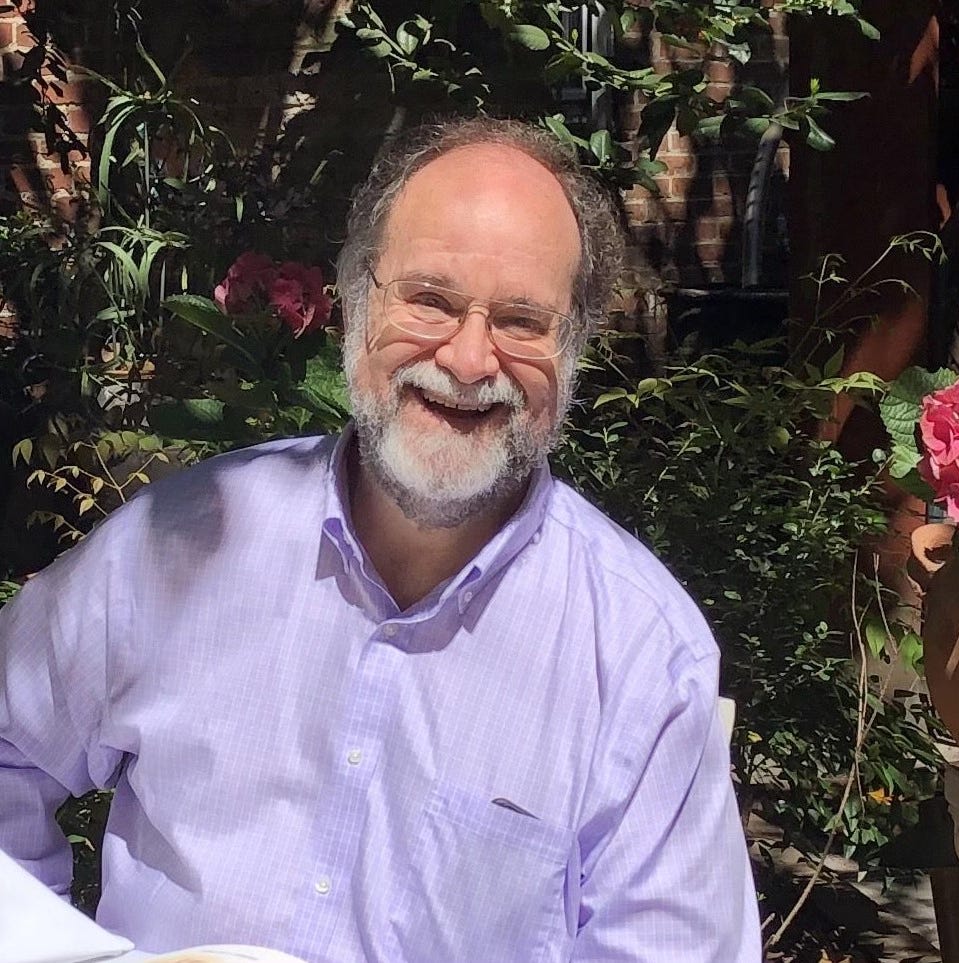
INTERVIEW WITH AUTHOR DAVID HOLLOWAY
David, what has your journey to becoming a writer consisted of?
I’ve always loved writing and reading. I published my first poems in a little surrealist magazine called Kayak as an undergraduate. Today, my writing focuses on short fiction. I’ve always been in love with the idea of creating new characters and the power of the creative act.
Is there anything about this piece and the inspiration for it that you would like to share with our audience?
I have to give a shout-out to my younger brother James, who read the earliest draft of this story and commented on the strange ways people react to grief. That was several drafts ago, but he gave me permission to lean into the pain that I hope this story reflects.
What is your process as a writer? Favorite rituals, most challenging aspects?
I don’t have a specific writing spot, although I do find that I get some good writing done while waiting- so doctor’s offices and airports seem to trigger my writing impulse (not sure what THAT’s about!). My only practice goal is to write something every day. That’s really the only promise that I make to my writing. When I try to set word-count goals or even a specific writing time, I disappoint myself, and it puts me off writing.
Who are your favorite authors and books?
I’ll try to restrain myself. This is a question that could launch me into a very long answer! I have been a compulsive reader from a very young age. Reading provided an escape from a chaotic childhood. I’ll limit myself to a few books and authors I find myself returning to.
I love Mark Twain, and my favorite book by him is Life on the Mississippi.
I enjoy the twisted takes on reality found in the books by George Saunders. Lincoln in the Bardo was one of the few recent books that made me cry. It has that lovely blend of Funny/Sad/Weird that appeals to me.
One of my favorite short stories is “Creation” by Jeffrey Ford. It won the World Fantasy Award for short fiction in 2002, and was nominated for several other awards. I have a weakness for stories about fathers and sons, and this is one of the best.
What is your perfect day?
A perfect day for me? A day spent surrounded by other people who love books and writing, so I just had a great week at the Writers in Paradise conference in St. Petersburg, Florida. I also had several nearly perfect days in my career as a rare book dealer. I loved the treasure hunt, but also really loved putting the right book in somebody’s hands. Hearing somebody say, “I never knew about this book! Or I never thought I’d find a copy of this!” always gave me a thrill.
We are so grateful that David submitted this beautiful, powerful story to our literary journal before his unexpected passing. To his friends and family who are mourning his loss, we wish there was something we could say or do to ease your pain, but we know that the loss your hearts are feeling is a testament to the man you are grieving. We are grateful for how he has touched so many hearts through his writing and our hearts are with you.
I really, really loved this. Definitely a roller coaster of emotions...also my husband works for Dr. Axelrod's son which is a strange coincidence! the car accident crushed me.
Really beautiful. I love how the story was constructed. A sensory way to lead us through this emotional journey. Thank you for sharing this. And thank you Sharon for publishing this.